Bingera
The Drover's WifeBingera is the site of a 1849 vigilante ambush that shapes Robert Parsen’s life and exposes the cycle of retaliation behind the novel’s frontier violence. There, Parsen and Gregory Blaxland led about fifty squatters and station hands in an attack on a group of roughly one hundred sleeping Gin Gin people.
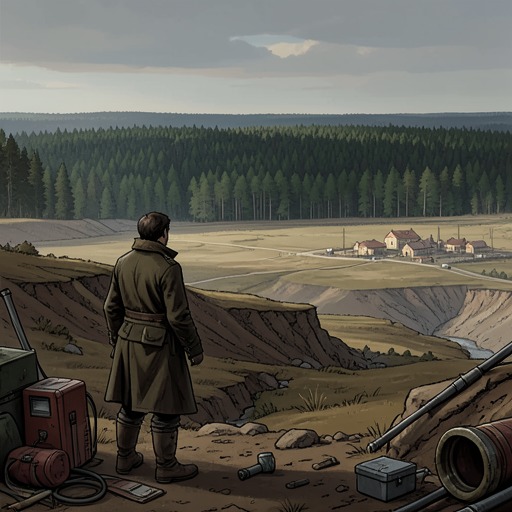
The Attack at Bingera
The attack followed the 1847 assault on the Ginginbarra clan, in which twenty-eight squatters were killed, including Parsen’s mother. Two years later, Parsen, then thirteen, joined forces with twenty-one-year-old Blaxland to organize the ambush at Bingera. The group chose to attack after a large gathering, anticipating that their targets would be asleep.
Parsen had learned to handle a gun at an early age and proved an accurate marksman during the attack. As people fled toward the Burnett River, he continued shooting. The violence was indiscriminate; the novel presents the episode not as justice for his mother but as a massacre that extends the harm of the earlier conflict.
Parsen’s Vendetta and the Place’s Significance
Parsen continued to blame Aboriginal people for his mother’s death, although she had been killed by a bullet fired by one of her own side during the earlier crossfire. That contradiction does not restrain his revenge. After the Bingera attack, he insists on blaming the people targeted by the posse, and the novel marks the moment as the last time he weeps for anyone. The massacre thus becomes a turning point: it deepens his ruthlessness and fixes his hostility in place.
Bingera also anchors the novel’s movement between personal grievance and colonial violence. Parsen’s grief supplies the stated impetus for revenge, but the attack falls on a much larger group and treats its members without distinction. The location therefore represents the transformation of loss into collective retaliation, rather than a resolution of the violence that preceded it.
A Place Recalled Through Violence
Bingera’s significance reaches beyond the ambush itself: it becomes a place through which the novel links frontier violence to the later machinery of racial classification and family separation. When Miss Shirley urges Judge Eisenmangher to remove Molly Johnson’s children, she invokes the allegation that Molly is harboring a wanted Aboriginal man and labels the children octaroons, presenting separation as urgent help. The judge signs the authorization. Danny later tells Molly that Miss Shirley used the term, and Molly recognizes it as the kind of racial label once used to threaten her own removal. Her recollection connects the judge’s order to the history disclosed by Yadaka and makes clear that the children’s immediate danger is not abstract: the document authorizes their separation from their mother.
From Massacre to Official Classification
The racial logic behind the violence at Bingera returns in a different form when Miss Shirley urges Judge Eisenmangher to remove Molly Johnson’s children. She calls them octaroons and presents their removal as urgent help, while invoking the allegation that Molly is sheltering a wanted Aboriginal man. The judge signs the authorization. Danny later tells Molly what Miss Shirley called them; the word recalls a threat made against Molly herself when she was eight, and helps her understand how her own ancestry and the account Yadaka gave her connect to the present danger. The authorization converts racial classification into an immediate threat of family separation, carrying coercion forward through official language rather than a vigilante attack.
From Massacre to Official Classification
The racial logic of collective violence at Bingera returns in bureaucratic form when Miss Shirley urges Judge Eisenmangher to remove Molly Johnson’s children. She invokes the allegation that Molly is sheltering a wanted Aboriginal man, calls the children octaroons, and presents separation as urgent help. The judge signs the authorization. Danny later tells Molly what Miss Shirley called them; the term recalls a threat made against Molly herself when she was eight, when Miss Shirley had heard that a mixed-heritage child could be sent away. Molly recognizes that the same classificatory logic now threatens her children, and connects the danger to what Yadaka has told her about her ancestry. The paper turns racial naming into an immediate instrument of family separation, carrying coercion forward through official authority rather than a vigilante attack.